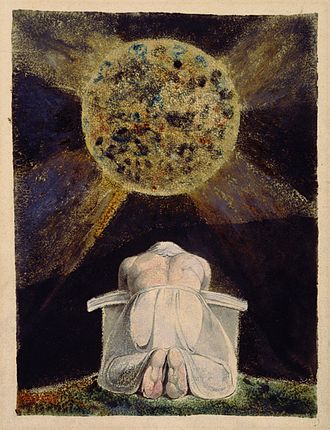
In traditional theology, God is often portrayed as a unchanging, all powerful, sovereign who governs the world from above, issuing commands and overseeing creation from a transcendent, elevated position. In contrast, evolutionary theology presents a more dynamic and future-oriented perspective, envisioning God as a dynamic presence who causes progress, drawing creation forward toward greater complexity, purpose, and meaning. In this framework, God evolves alongside creation, experiencing change and growth as the universe unfolds. This view challenges the notion of a static, unchanging deity and instead envisions a God who participates in the ongoing story of the cosmos, adapting and responding to the world’s evolving needs.
One of the primary advantages of viewing God as the one who energetically leads us forward is that it aligns more closely with a dynamic, evolving universe. Rather than seeing the world as a static creation ruled by fixed laws and divine decrees, evolutionary theology emphasizes that life is in constant motion, unfolding through time toward greater levels of creativity and novelty. In this view, God is not a distant ruler but a beacon of possibility, inviting humanity to participate in the ongoing process of creation. This perspective offers a hopeful, forward-looking vision of the divine, suggesting that the best is yet to come and that human beings have a meaningful role to play in shaping the future.
Borrowing from quantum physics, the relationship between humanity and God is often described as one of entanglement. What happens to humanity affects God and what happens to God affects humanity. To be is to be relation, everything finds its nature in relationship to other beings. Rather than being transcendent and unmoved, God in this theology is enmeshed with humanity and ever present in creation.
Another benefit of this evolutionary approach is that it empowers human agency. If God is a force drawing us forward rather than a monarch imposing rules from above, humans are seen as co-creators in the evolutionary process. This perspective encourages responsibility, innovation, and moral growth, as individuals and communities are invited to take an active role in realizing the divine potential inherent in the world. Rather than passively obeying divine commands, people are called to collaborate with the unfolding of creation, shaping a future that reflects higher values of goodness, truth, and beauty.
Evolutionary theology also resonates with the scientific understanding of emergence and complexity. The universe, as revealed through science, is a story of increasing complexity and interconnectedness, from simple particles to life, consciousness, and culture. Seeing God as leading from ahead harmonizes with this narrative, suggesting that divine purpose is progressively revealed through history, culture, and individual transformation. This view gives meaning to the struggles and tensions inherent in life’s evolutionary journey, framing them as part of a larger trajectory toward wholeness and flourishing.
 Evolutionary Spirituality